 PDF · 12 pages ↗
Human health
PROBIOLEX
A probiotic and synbiotic product portfolio for different stages of life.
Guides, technical notes, clinical summaries and case studies we have prepared so that you can approach the problems you encounter in the field within a scientific framework.
GENOVITECH / PRODUCT CATALOGUES
PDF · 12 pages ↗Human health
A probiotic and synbiotic product portfolio for different stages of life.
 PDF · 14 pages ↗
Animal health
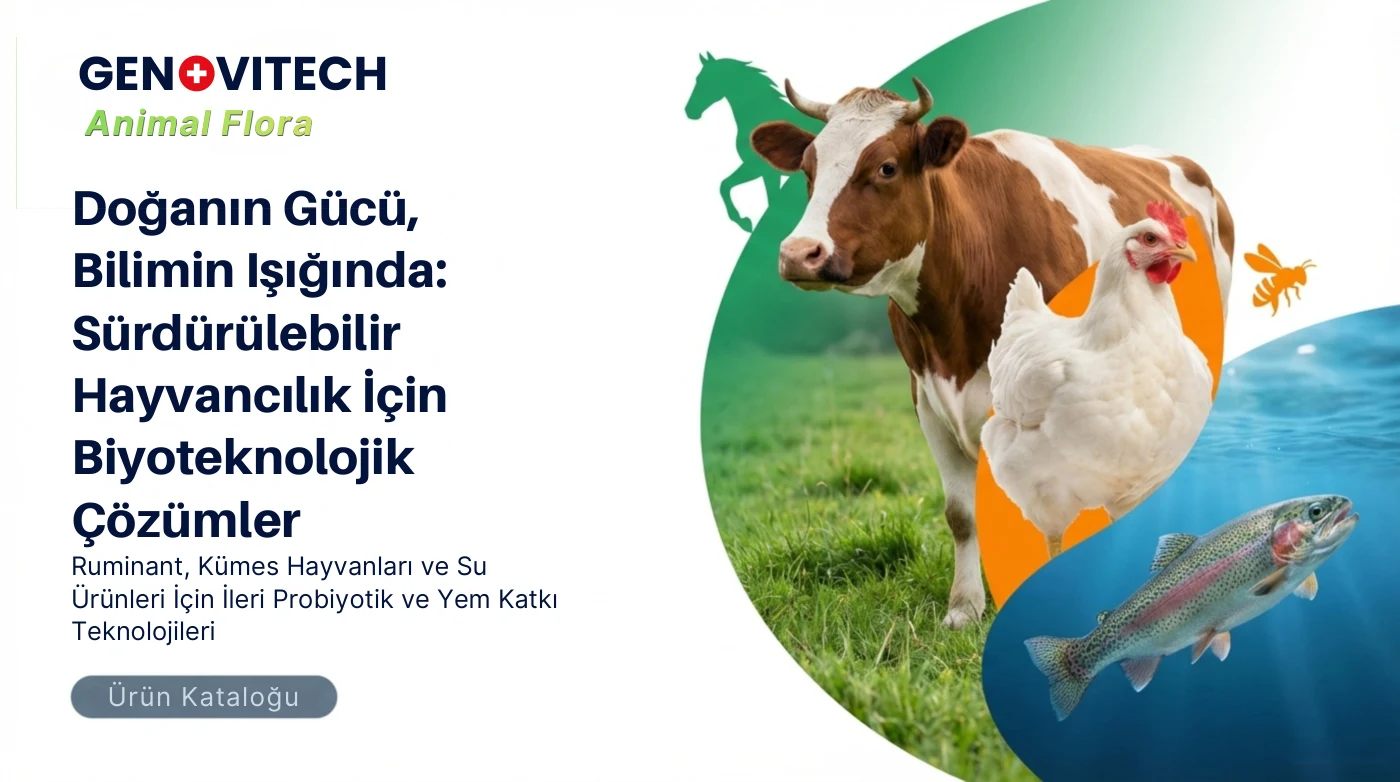
Biotechnological nutrition solutions for ruminants, poultry and aquaculture.
 PDF · 11 pages ↗
Skin and hair care
Dermo-cosmetic care with probiotic and postbiotic complexes. Catalogue in English.
The withdrawal of antibiotic growth promoters does not have to mean a loss of performance. We explain step by step how FCR is preserved through early colonisation, correct strain selection and synbiotic protocols.
Why is nourishing the skin barrier more effective than disinfecting it? We examine the effects of postbiotics on keratinocyte stimulation, barrier protein expression and pathogen colonisation.
The effect of the Lactobacillus reuteri strain on infantile colic has been demonstrated in clinical studies. The reduction in crying time, reuterin production and the gut-brain axis mechanism.
SARA is the most frequently overlooked cause of milk fat depression and lameness cases. We assess the effect of live yeast culture on rumen pH and fibre digestion using field data.
Streptococcosis and yersiniosis are the leading cause of stock losses in trout farming. We examine how antibiotic use is reduced through a vaccination protocol.
Mineral adsorption alone is not sufficient for every toxin. We explain how the trio of mineral, yeast cell wall and bacterial enzyme work together.
In feed production, pelleting temperature renders a large proportion of non-spore-forming probiotics inactive. We demonstrate with data why the spore form is critical.
Residue and GMO declarations are subject to increasingly strict scrutiny in export markets. We summarise what to consider in product selection and documentation.
Choosing the right product is half the job. The other half is the right dosage, the right point of application and a measurable result. That is why we step in before the sale, not after it.
The correct dose of a toxin binder cannot be determined without measuring the mycotoxin load and microbiological quality of the raw material used. We analyse your sample and plan the dosage recommendation together with you.
If you want to see product efficacy through your own herd's data rather than catalogue data, we set up the field trial protocol together: control group, measurement parameters and evaluation schedule.
Your process conditions (heat, pH, salinity, shelf life, packaging) determine product selection. We review your process parameters and prepare a strain, form and microencapsulation recommendation suited to your line.
In supplements and feed additives, label declarations, certification requirements and compliance rules in export markets directly affect the product development process. We prepare the documentation package for you.